A website can contain a lot of information and only a little interaction. React Server Components help keep some of the work for that information outside the browser bundle. Understanding where components run, what data crosses the boundary, and which parts need browser state makes it easier to build a fast site without confusing the architecture.
01What a Server Component actually does
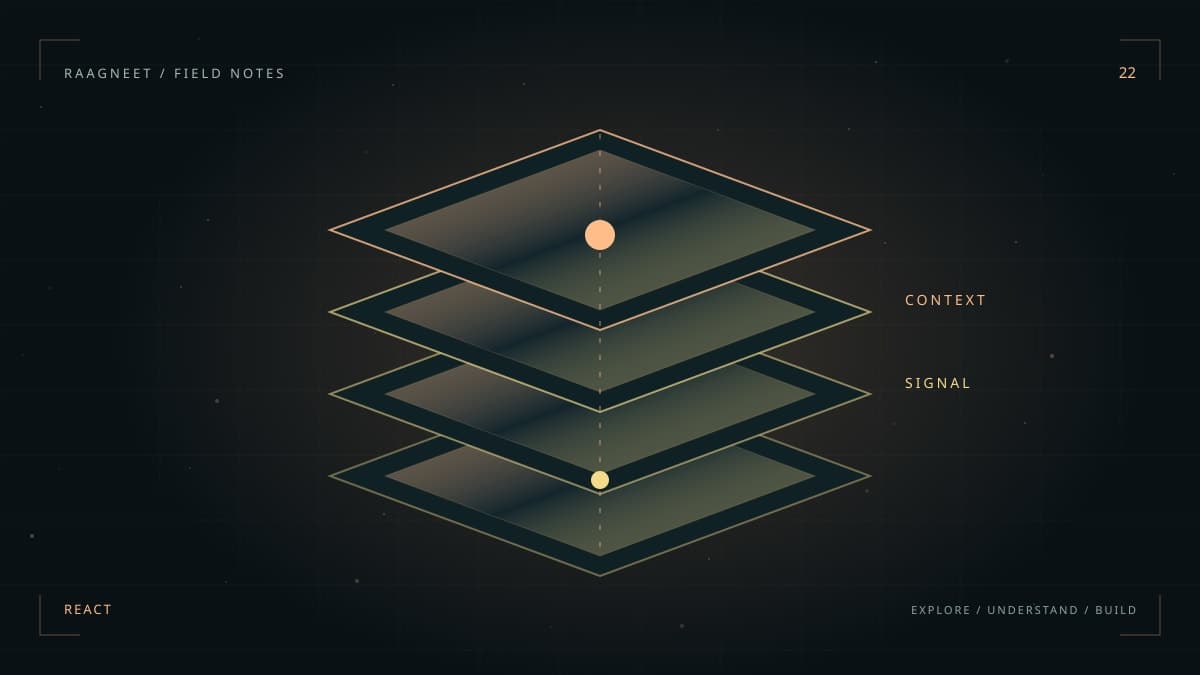
React describes Server Components as components that render in a separate environment before client bundling. They can run at build time or for individual requests, depending on the application. Their implementation code and server-only dependencies do not need to become part of the browser's component bundle. [1]
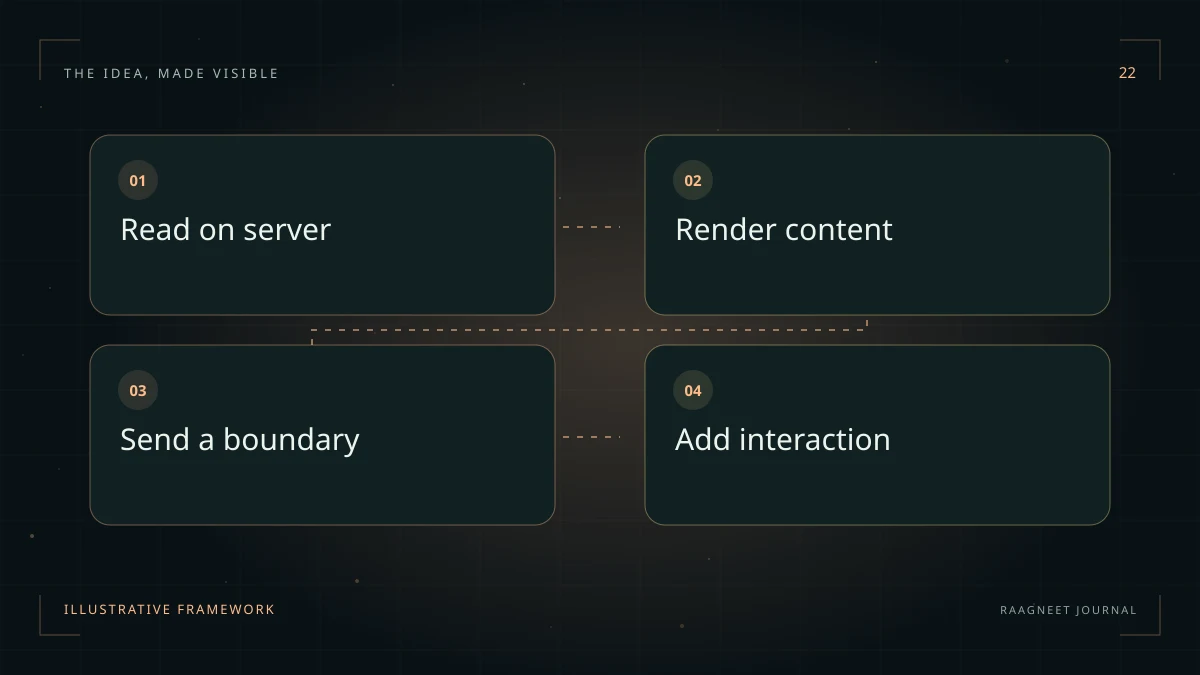
For an illustrative journal, the article body can be prepared from local content on the server. The browser receives the rendered result and the data needed for the interactive parts. It does not need an entire content-processing library just to display text that is already known.
02Distinguish component type from rendering strategy
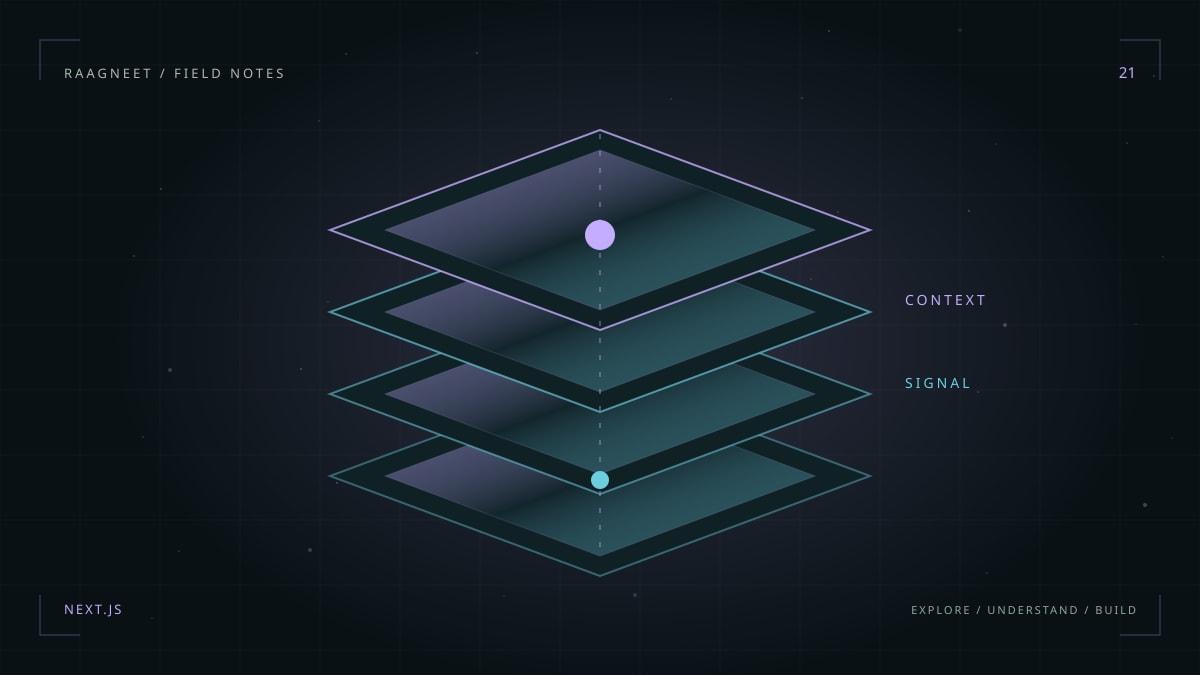
Server Components and server-side rendering describe related but different concerns. A framework can produce initial HTML for a page containing Client Components, while Server Components determine which component code stays outside the client bundle. A client boundary does not automatically mean the first screen must be blank until JavaScript runs. [2]
In the Next.js App Router, place browser-dependent state and event handlers in appropriate Client Components. Keep surrounding content on the server when it does not need those capabilities. Read the framework's current documentation because bundling and caching details belong to its implementation.
03Draw small interaction boundaries
A category filter needs state, input handlers, and a way to update the visible list. The article prose, source references, and static header do not need those handlers. Pass the filter a compact summary list rather than importing every full article into its client dependency tree.
This is an architectural example, not a guarantee of a specific bundle size. Inspect the generated output to see what ships. A large third-party library pulled into a small interactive component can still dominate the browser work even when the rest of the page uses Server Components.
04Treat data crossing the boundary carefully
Server-side access does not make all resulting output private. Anything rendered into a public page or passed to a Client Component may become visible to the visitor. Keep credentials and privileged records out of those props and verify authorisation before fetching or displaying private data.
Use plain serializable values for ordinary component data and follow current framework rules for supported types. Avoid passing entire database records when a title and identifier are sufficient. Narrow props make the public contract easier to understand and reduce accidental exposure.
05Check the experience as well as the code
Test direct loading, navigation, hydration, errors, and slow connections. Make sure important content is available without waiting for an unnecessary client request. Keep loading states useful when data really is dynamic, and do not conceal a server error behind an endless skeleton.
Use Server Components where they simplify data and rendering work. Use Client Components where interaction requires them. The objective is a coherent product with clear boundaries and an appropriate amount of browser code, not achieving the largest possible count of server-rendered files.
Common questions
Can a Server Component use useState?
No. Browser state and event handlers belong in a Client Component. A Server Component can compose Client Components and pass supported data to them.
Are Server Components the same as SSR?
No. Server Components define where component code runs and which code reaches the client bundle. SSR concerns generating initial HTML. A framework can combine the two.
Sources & further reading
Primary documentation and further reading are linked below. Examples and decision frameworks are illustrative; product capabilities can change.
Created with AI assistance for the RaagNeet Journal. This guide does not claim original product testing or benchmark results. Original illustrations by RaagNeet. Send a correction.