The Gemini 4 family is easier to understand as a set of options for different workloads than as a ladder where every newer release replaces the previous one. Carbon, Neon, Hydrogen and Argon need to be compared against the work you plan to run. A useful selection process also accounts for your application, available tools and the pricing terms that apply after launch promotions end.
01Map the family to workloads
Google positions Carbon for deep investigations, Argon for broad engineering work, Hydrogen for efficient execution and Neon for complex professional workflows. These roles overlap; they are starting points for evaluation rather than hard capability boundaries. [1]
Do not infer model intelligence from the chemical name or release order. An appropriate choice depends on whether your bottleneck is investigation quality, execution speed, reviewer effort or the number of requests you must handle during peak traffic.
02For coding, separate planning from execution
An architectural investigation needs competing hypotheses and a coherent explanation. A well-specified implementation needs disciplined edits and verification. You can evaluate those stages separately even if you ultimately use one model for both.
Give each candidate the same repository and requirements. Compare whether the finished patch addresses the cause, preserves compatibility and passes meaningful checks. If one model is only allowed to explain while another can run tests, the comparison does not isolate model performance.
03For knowledge work, test the deliverable
A research memo, spreadsheet analysis and document review each have different failure modes. Create sample tasks that require locating evidence, handling an exception and producing an output someone can use without reconstructing the whole source material.
Review the delivered artifact, not just the conversation. Check calculations, citations and formatting where they matter. Count the time needed to correct a superficially polished output, and distinguish a legitimate missing-data warning from an avoidable omission.
04Check pricing beyond the launch window
Google documents introductory Carbon and Argon rates through November 30, 2026, with different rates beginning December 1. Treat a temporary price as a temporary budget assumption and consult the live pricing page before committing usage.
Also check your processing tier and whether input reuse qualifies for caching. Estimate ordinary months and a peak-traffic month. A model choice that is economical under a launch discount may need a routing adjustment once the standard rate applies.
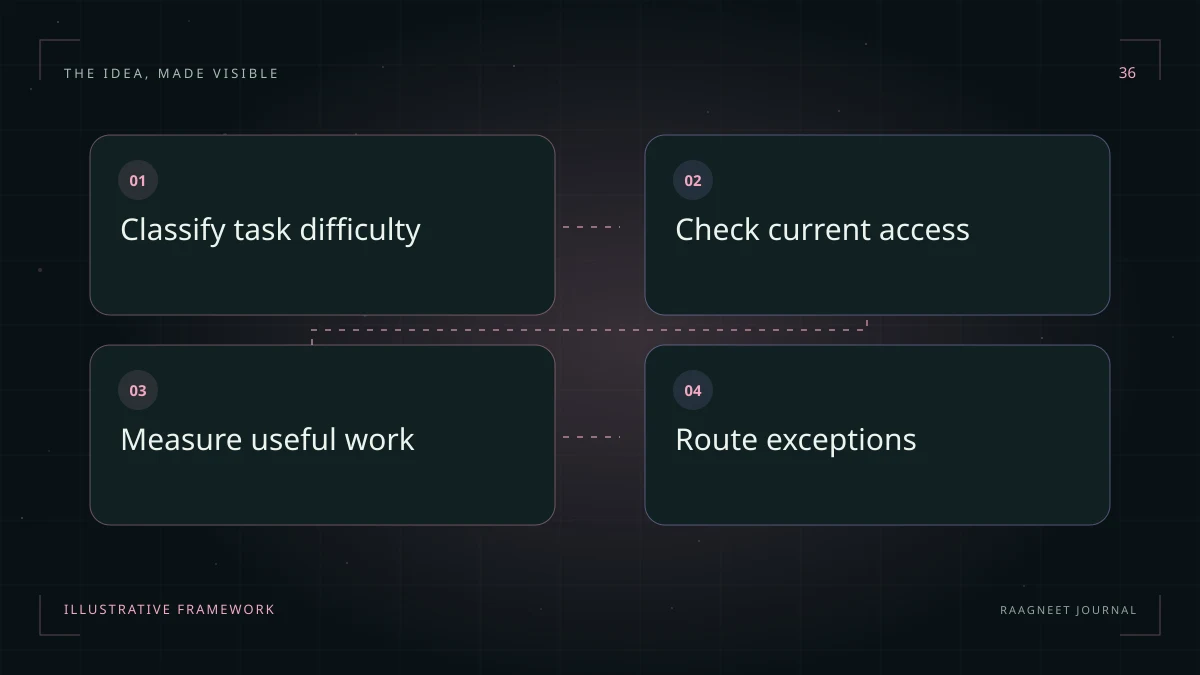
05Keep routing simpler than the problem
Start with one default and an explicit exception category. For example, route failed validation or an unresolved multi-file investigation to a second candidate. Avoid asking another expensive model to decide every trivial routing question.
Log the route, result and correction effort so you can see whether escalation helps. Keep the original requirements and relevant evidence available across the handoff. Re-evaluate routing when the workload changes rather than assuming a family comparison stays current indefinitely.
Common questions
Is Carbon the right choice for every request?
A demanding model may be unnecessary for well-defined work that a lighter configuration already completes correctly. Test the quality threshold and accepted-task cost before routing your entire application to the most intensive option.
Can one project use several Gemini models?
Yes, where your platform and access permit it. The operational question is whether the benefit outweighs routing, debugging and monitoring complexity. Begin with a small, observable split between routine work and difficult exceptions.
Sources & further reading
Primary documentation and further reading are linked below. Examples and decision frameworks are illustrative; product capabilities can change.
- Google: Gemini 4 Carbon availability
- Google: introducing Gemini 4 Neon
- Google: introducing Gemini 4 Hydrogen
- Google: Gemini API pricing
Researched against primary sources on 23 November 2026. Recommendations are editorial analysis, not a hands-on benchmark. Pricing and access can change. Original illustrations by RaagNeet. Send a correction.