Fable 5.2 and Mythos 5.2 should not be treated as two interchangeable buttons with a universal performance winner. Access and intended use are central to the comparison. For a business choosing an assistant, the useful question is which documented, available route supports the work it needs to perform under appropriate controls. This article explains that decision without inventing a public head-to-head benchmark.
01Start with the access distinction
Anthropic's Fable page describes Fable availability and discusses Mythos 5.2 access through specialist verification routes. The system-card collection groups the models for evaluation documentation. Neither fact means every customer has identical access to both. [1]
Before planning an integration, verify eligibility and the approved product route for the intended task. Do not design a production workflow around a model name you cannot actually obtain. Availability is an engineering constraint, not an afterthought to a capability comparison.
02Match the task to the product
A business drafting documents or improving ordinary application code needs a supported general workflow. Specialist research can involve different requirements, review processes and controls. Describe your actual use case rather than choosing the model with the most dramatic reputation.
Where access restrictions apply, follow the provider's documented application process. Avoid assuming another interface offers equivalent access or that a refusal is evidence of a technical fault. The correct purchasing decision may be to use a generally available tool for the supported portion of the work.
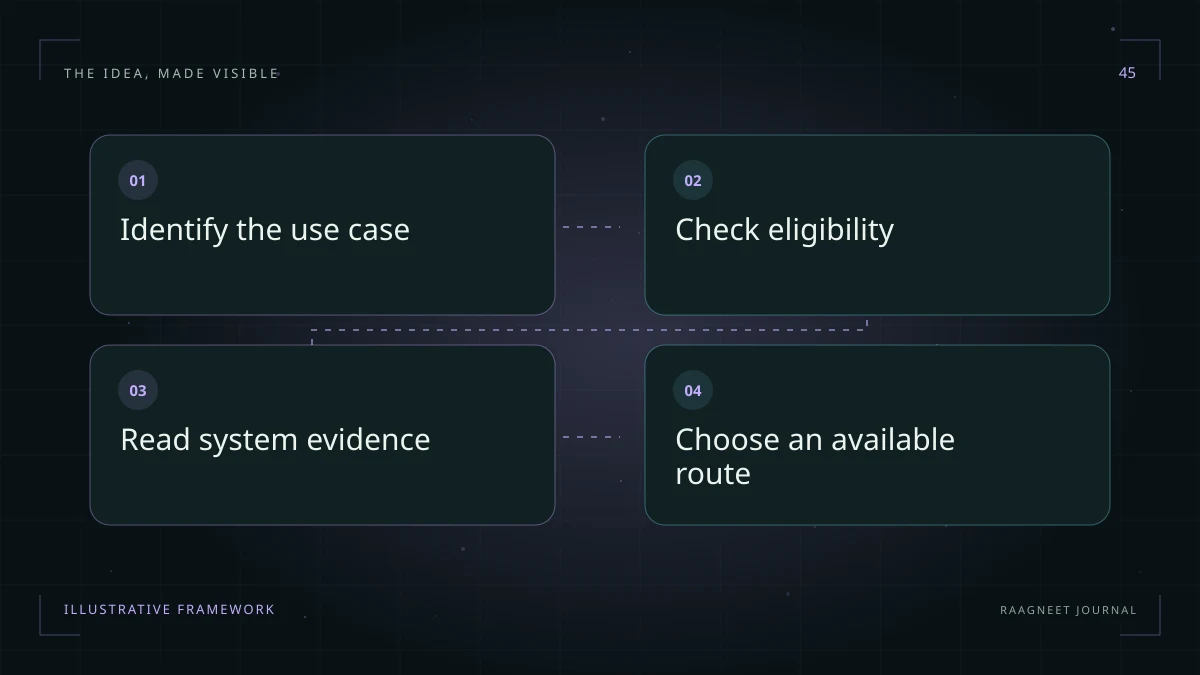
03Read system cards as scoped evidence
System documentation can explain evaluations, limitations and deployment decisions. It is valuable context, but it does not establish how a model will perform on your project. Read the conditions and scope behind a reported result before drawing a general conclusion.
Keep vendor-reported evaluations separate from your own measurements. If you publish a comparison, label which statements come from documentation and which are recommendations. Do not convert a restricted-access capability discussion into an unsupported claim about everyday coding superiority.
04Test the available workflow
Evaluate the model you can use with a fixed task set and suitable tools. For coding, review the patch and behavior; for analysis, audit material claims. Include incomplete information so the evaluation tests how the assistant handles uncertainty.
Record whether tasks are completed, corrected or blocked and why. A supported access boundary should not be scored in the same way as an incorrect answer. This distinction helps an organisation choose a realistic workflow instead of repeatedly trying to force a mismatched product to behave differently.
05Make a procurement decision you can explain
Write a short decision record covering use case, eligible access, data handling, required tools and acceptance checks. Compare operating cost and reviewer effort for the available candidates. Include an owner for handling product or access changes.
For ordinary business work, prioritise a dependable supported route. For specialist work, obtain the relevant access before promising delivery. A transparent explanation of those constraints is more useful than an invented ranking that ignores who can use the system and under what conditions.
Common questions
Is Mythos simply a paid upgrade to Fable?
Do not assume a simple public upgrade path. Anthropic's documentation discusses specialist verification programs. Check the current eligibility and access terms for your intended use instead of treating the names as interchangeable subscription tiers.
Which is better for ordinary application development?
This article does not report a measured head-to-head result. Start with the model and tools available for your supported workflow, then evaluate realistic repository tasks. Restricted specialist capability does not automatically predict better everyday development results.
Sources & further reading
Primary documentation and further reading are linked below. Examples and decision frameworks are illustrative; product capabilities can change.
Researched against primary sources on 23 November 2026. Recommendations are editorial analysis, not a hands-on benchmark. Pricing and access can change. Original illustrations by RaagNeet. Send a correction.