The best AI for website development should help deliver a working website, not merely generate a convincing homepage screenshot. A practical comparison needs mobile navigation, forms, content structure and backend behavior alongside visual design. This guide explains how to shortlist current coding models and assess their work before choosing a subscription, integrating an API or assigning a client project.
01Build a sensible model shortlist
Current OpenAI and Google announcements describe models for software work, while Claude Code documents an agentic development environment. These are different layers of the purchase: the model produces decisions and code, while the environment provides project and tool access. [1]
Shortlist tools that support your existing repository and framework. Before paying for a change, confirm that the assistant can inspect your actual code, follow local instructions and run the relevant checks. A strong model in a constrained chat interface may not fit your workflow.
02Use a complete website brief
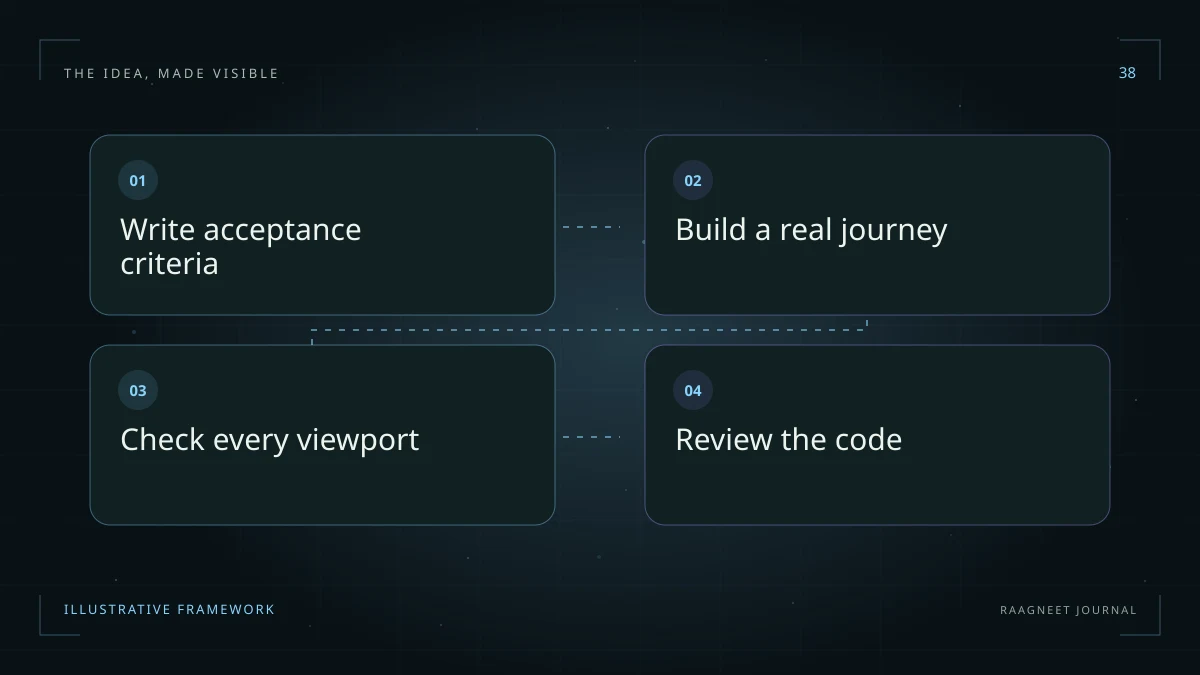
Choose a small business site with a services page, contact form and one conversion journey. Specify the audience, available brand assets and required behavior. Include a mobile menu and a realistic validation error so the evaluation extends beyond the happy path.
Give each candidate the same brief and a clean starting state. Ask for a working implementation with a concise handover. Avoid measuring how well the assistant reproduces an arbitrary screenshot when your actual need is a site that customers can navigate and use.
03Review design in the browser
Inspect at a narrow phone width, a tablet width and a typical desktop viewport. Look for cropped cards, overlapping navigation, excessive empty space and text that becomes difficult to read. Verify that important actions remain reachable when content grows.
Use the keyboard to open menus, reach links and submit forms. Check visible focus and meaningful labels. Motion should support the experience without making content inaccessible. These observations are more informative than asking the model whether its own page is responsive.
04Check engineering and search foundations
Inspect semantic headings, crawlable links, canonical URLs and social metadata. For dynamic pages, confirm that meaningful content is available to the server-rendered route. Good metadata cannot rescue a page that fails to load or answers the wrong search intent.
Review form handling and integrations for actual success and failure states. Keep credentials on the server where appropriate. Require evidence for claimed verification, and inspect whether a fix introduces unrelated dependencies or replaces maintainable components with unnecessary complexity.
05Choose for the work you will repeat
A portfolio redesign and a custom customer portal call for different strengths. Record where each candidate needed your intervention: layout judgment, framework APIs, database design or testing. Select based on the tasks your team performs repeatedly.
For client delivery, maintain an explicit review and handover step. The business remains responsible for content, analytics choices and operational ownership. A model that makes the first draft quickly is useful; one that helps you finish and maintain the website is more valuable.
Common questions
Can AI build an entire business website?
It can assist across design and implementation, depending on the tools available. The resulting website still needs review of content, accessibility, integrations and deployment. A generated first version is not automatic evidence of production readiness.
Which model is best for Next.js?
Use a model and environment that can read your installed version's documentation and run the project. Test real routes and interactions. Framework compatibility and disciplined verification matter more than a generic claim that one model is always best.
Sources & further reading
Primary documentation and further reading are linked below. Examples and decision frameworks are illustrative; product capabilities can change.
- OpenAI: GPT-6.2 Astra and Sol announcement
- Google: introducing Gemini 4 Hydrogen
- Anthropic: Claude Code overview
Researched against primary sources on 23 November 2026. Recommendations are editorial analysis, not a hands-on benchmark. Pricing and access can change. Original illustrations by RaagNeet. Send a correction.