A detailed prompt can still fail when the model receives the wrong information. Context engineering is the practical work of deciding what belongs in a request: instructions, source material, tool results, prior decisions, and task state. The aim is to supply enough relevant information to act correctly without burying it in noise.
01Context is more than the latest message
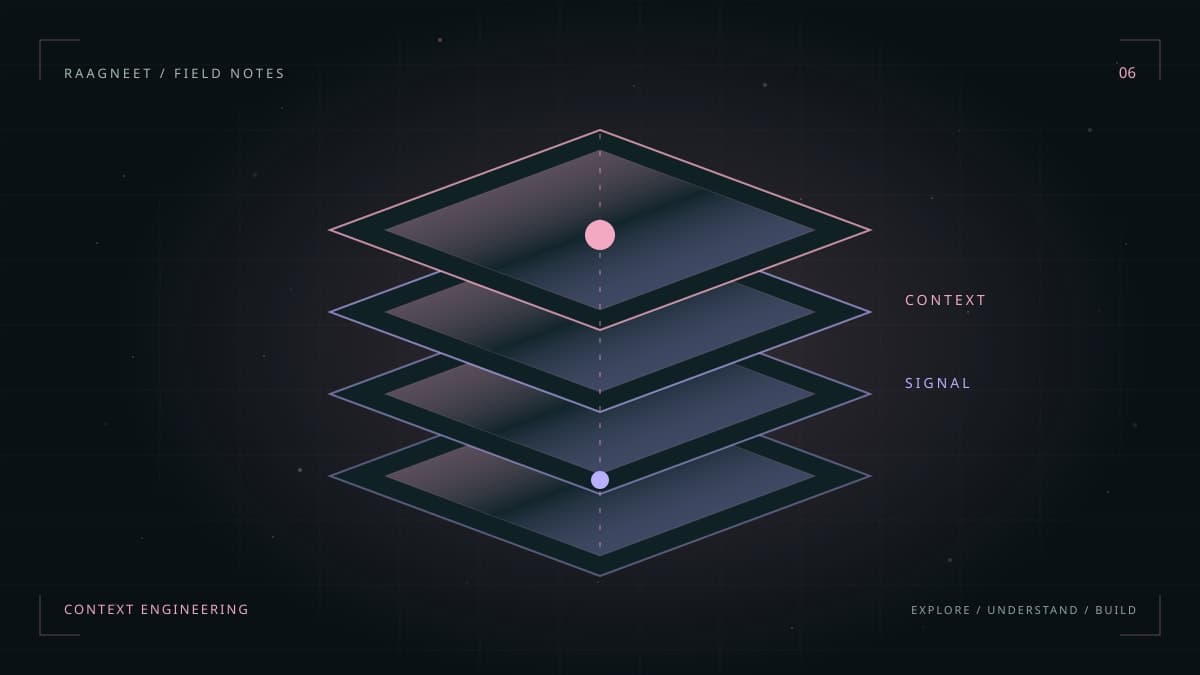
An agent request can contain system instructions, tool definitions, retrieved documents, conversation history, and outputs from earlier steps. These elements compete for attention and available space. Effective context management selects what the task needs at the current step rather than appending everything indefinitely. [1]
For an illustrative website assistant, the current design brief, approved colour palette, and relevant component source may matter more than a long history of abandoned design ideas. Supplying every previous draft can leave the system unsure which decision is current.
02Revisit old instructions as models change
Guidance for one model generation may not transfer cleanly to another. Anthropic's July 2026 context-engineering discussion describes changes to how its own coding system supplies instructions. The useful lesson is to evaluate your instruction stack when the underlying model changes, rather than assuming more instructions always help. [2]
Keep project rules concise and observable. Replace vague instructions such as be excellent with concrete expectations such as preserve existing routes and report the checks performed. When two instructions conflict, remove or resolve the conflict at its source.
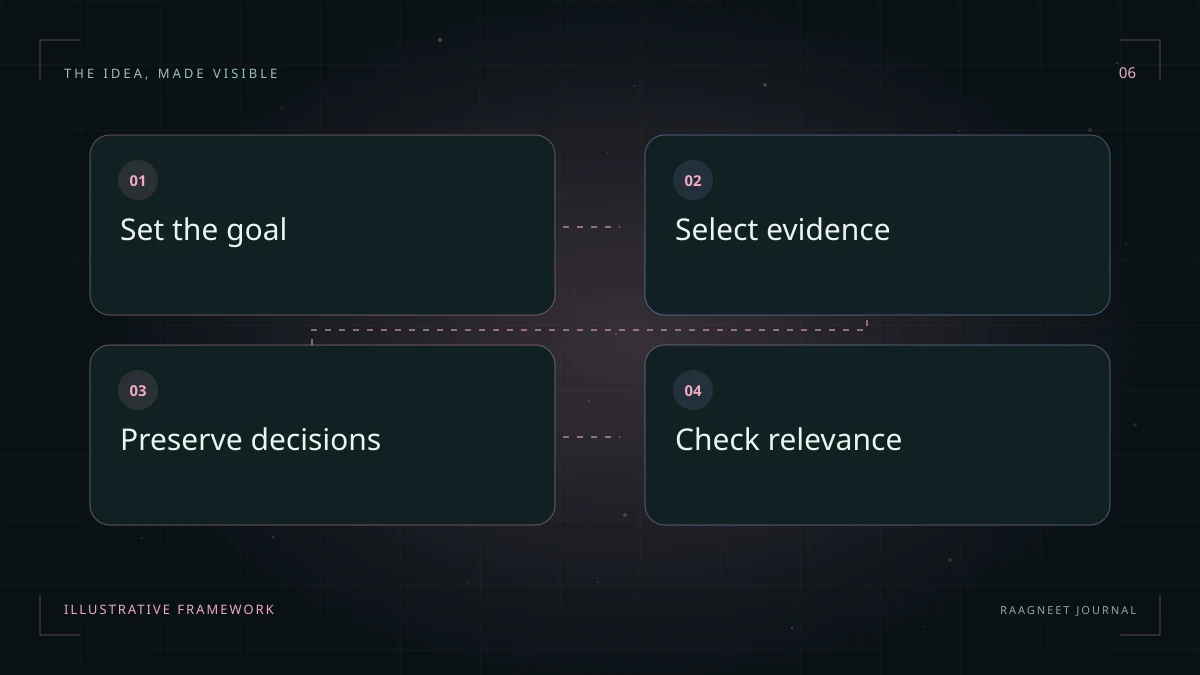
03Separate evidence from decisions
Label retrieved text with its origin, date, and permission scope. Record a decision as a decision, including who approved it where relevant. A quote from a customer message should not quietly become a permanent company policy simply because it appeared in an earlier conversation.
A useful task record might contain the goal, completed steps, unresolved questions, approved constraints, and links to source files. This is an editorial design proposal for managing state. Its value should be judged by whether a new run can resume accurately without reconstructing an entire transcript.
04Manage memory deliberately
Use temporary working notes for intermediate calculations and durable storage for facts that future sessions actually need. Summaries should preserve identifiers, uncertainties, and unresolved actions. An elegant summary that drops an important exception can cause a more serious failure than a longer but accurate one.
Test your compaction strategy with a task that spans several sessions. Check whether the system remembers the latest requirement, recognises completed work, and retains evidence of partial failures. Keep original records available when a summary needs to be verified.
05Measure context quality through outcomes
Compare a small relevant context with a larger version on the same tasks. Record factual correctness, appropriate tool selection, unnecessary actions, latency, and cost. If the larger context adds contradictions or outdated instructions, extra capacity may make the task harder.
Context engineering is an ongoing maintenance practice. Remove stale examples, update source references, and keep sensitive information within its intended boundary. A system that can explain where its current facts came from is easier to debug than one that treats its entire history as equally reliable.
Common questions
Is context engineering the same as prompt engineering?
Prompt wording is part of it. Context engineering also covers retrieved evidence, tool descriptions, memory, conversation state, and the process for choosing what reaches the model.
Should I always use the largest context window?
No. Use enough context to support the task and test its relevance. Larger windows do not guarantee that the right fact will be selected or that conflicting information will be resolved correctly.
Sources & further reading
Primary documentation and further reading are linked below. Examples and decision frameworks are illustrative; product capabilities can change.
- Anthropic: Effective context engineering for AI agents
- Anthropic: Context engineering for Claude 5 generation models, July 2026
Created with AI assistance for the RaagNeet Journal. This guide does not claim original product testing or benchmark results. Original illustrations by RaagNeet. Send a correction.